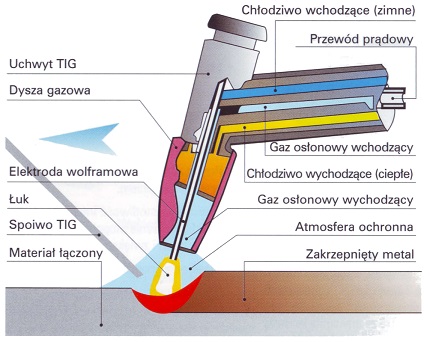
When a tungsten electrode (non-consumable!) is brought close to the material being welded (joined material), an electric arc is generated, melting the material and the TIG filler metal (metal rod) supplied next to the torch, creating a liquid weld pool. As the arc recedes, the weld pool solidifies, creating a permanent joint. A shielding gas is continuously supplied through the welding torch and its gas nozzle, protecting the molten metal from atmospheric exposure.
Torches can be liquid-cooled (as shown in the diagram) – the coolant is supplied to the torch and operates in a closed circuit with the cooler.
Voltage is applied to the tungsten electrode via a current cable extending from the power source (welder).